
← Back to the Northern Crete tour
An exhibit for The Goddess in Northern Crete
The Treasures of Crete: a Minoan exhibit
Twenty treasures of Minoan Crete, from the faience Snake Goddess to the golden bees of Malia, hung in four rooms. Most of them live in the Heraklion Archaeological Museum, where we stand before them on Day 2 of The Goddess in Northern Crete with Anique Radiant Heart, 19–26 August 2027.
Scroll to walk from room to room, or walk the gallery one treasure at a time. Select any treasure to open its case and look closer.
Walk the gallery
Step through the treasures with the arrows, a swipe or your arrow keys. Select the treasure in the spotlight to open its case.
Room I
The Goddess and her Priestesses
In Minoan art women stand at the heart of ceremony: the Goddess with a serpent in each hand, priestesses pouring libations, ladies in jewels and blue. These are the images that have drawn so many women to Crete in search of Her.
 1
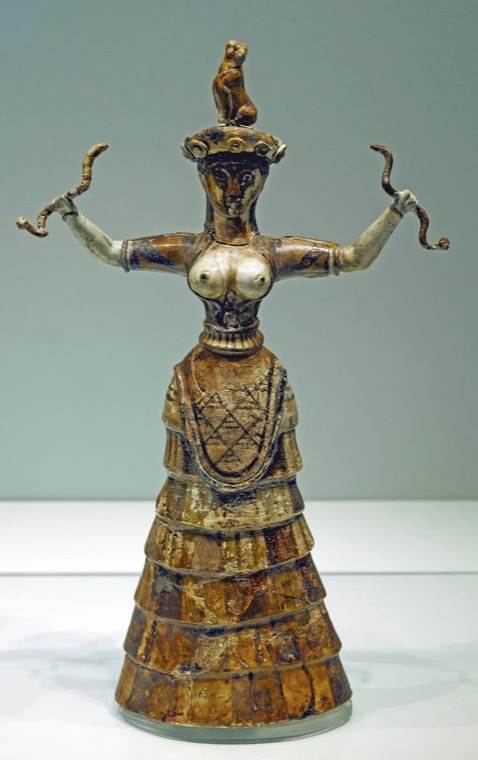
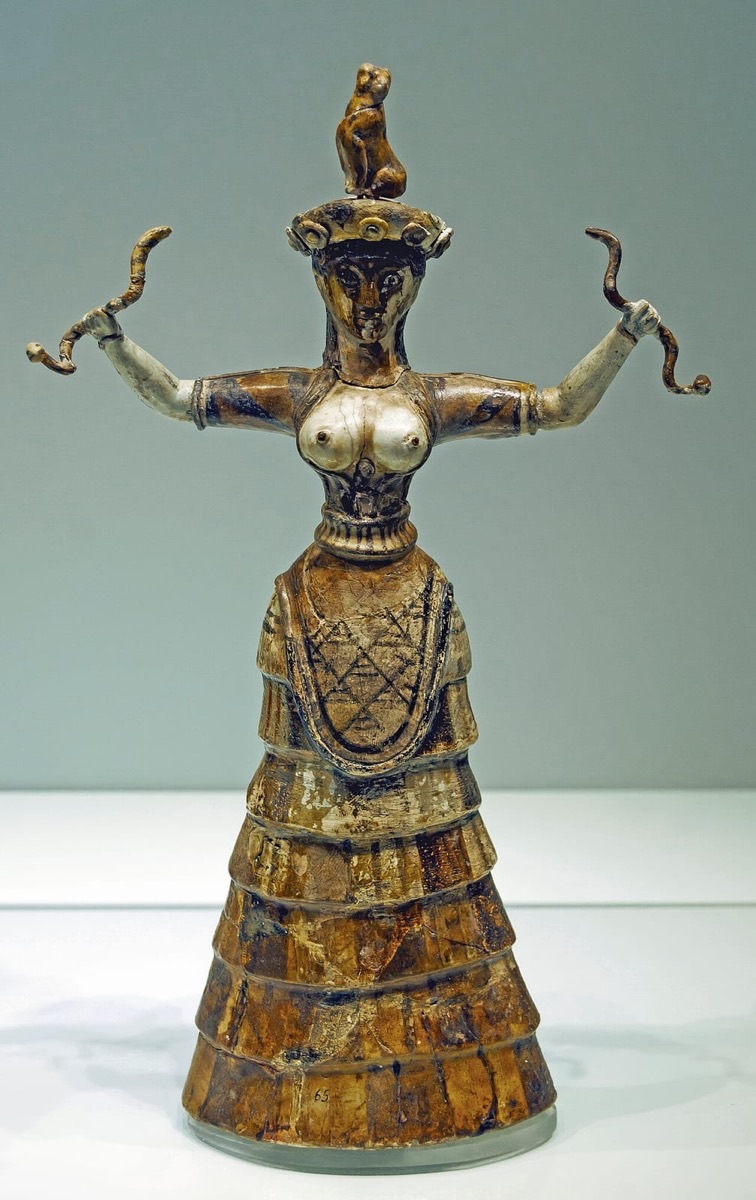
The Snake Goddess
She holds a serpent in each hand, arms raised, crowned and full of power. Made of faience, a glazed quartz paste, she was found in 1903 in stone-lined pits beneath the floor of a shrine room at Knossos, together with other cult objects. She is the most famous image of the Great Mother of Minoan Crete, and of the women who served Her; whether she shows the Goddess Herself or a priestess in Her likeness is still debated.
On the tour: Day 2, the Heraklion Museum
Photo: Jebulon, Wikimedia Commons, CC0
 2
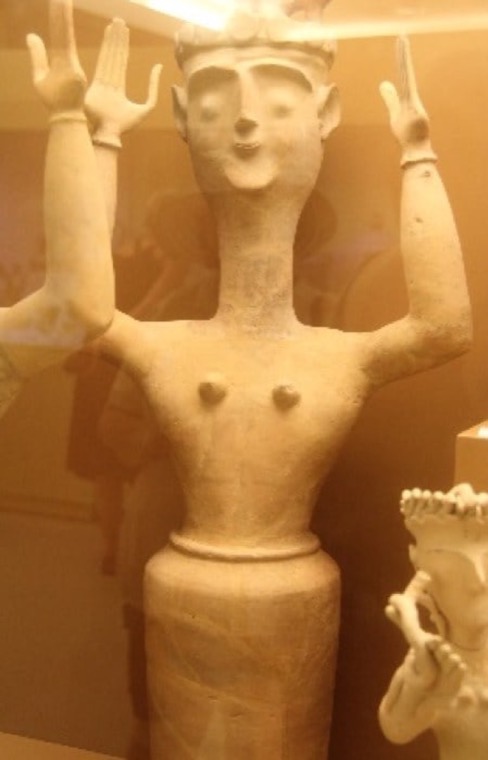
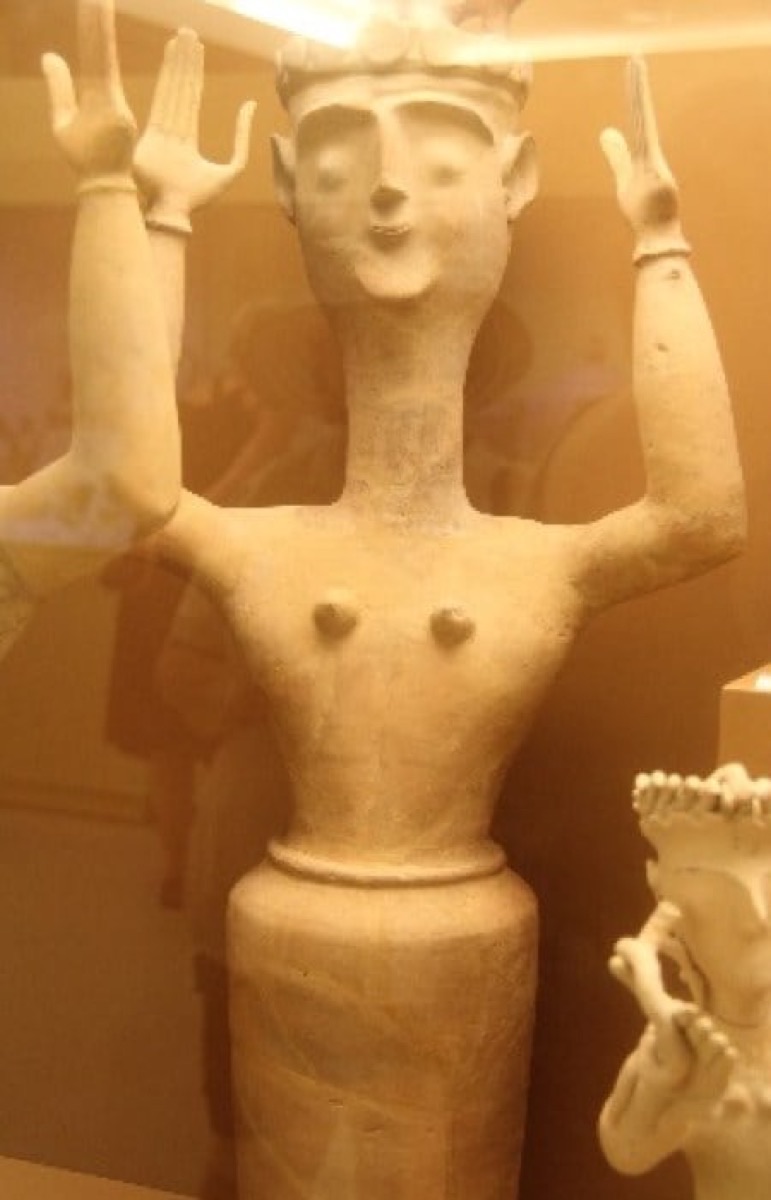
The Goddess with upraised arms
Crowned and standing with her arms raised in blessing, she belongs to the last centuries of Minoan Crete. Figures like her were made of clay, their bell-shaped skirts thrown on the potter’s wheel, and they stood in small shrines at sites such as Gazi and Karphi, their crowns set with birds, horns or poppy heads. The raised hands, palms open, are read as a gesture of epiphany: the Goddess appearing to Her people, or blessing them.
On the tour: Day 2, the Heraklion Museum
Photo from one of Anique’s past tours
 3
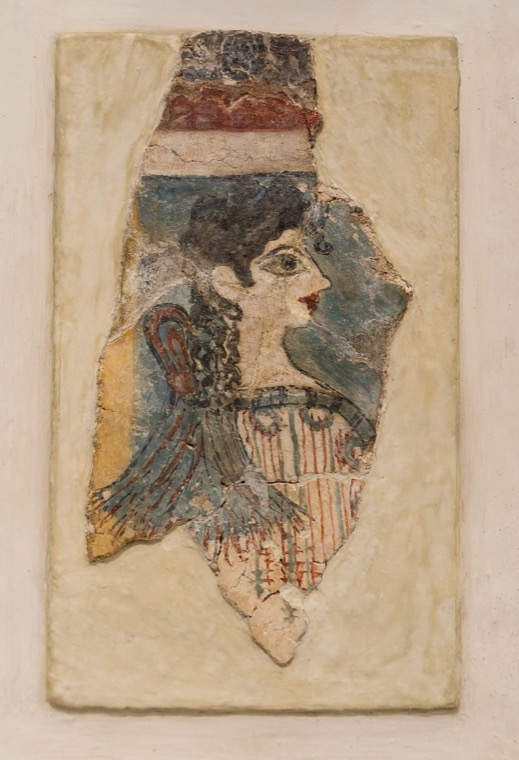
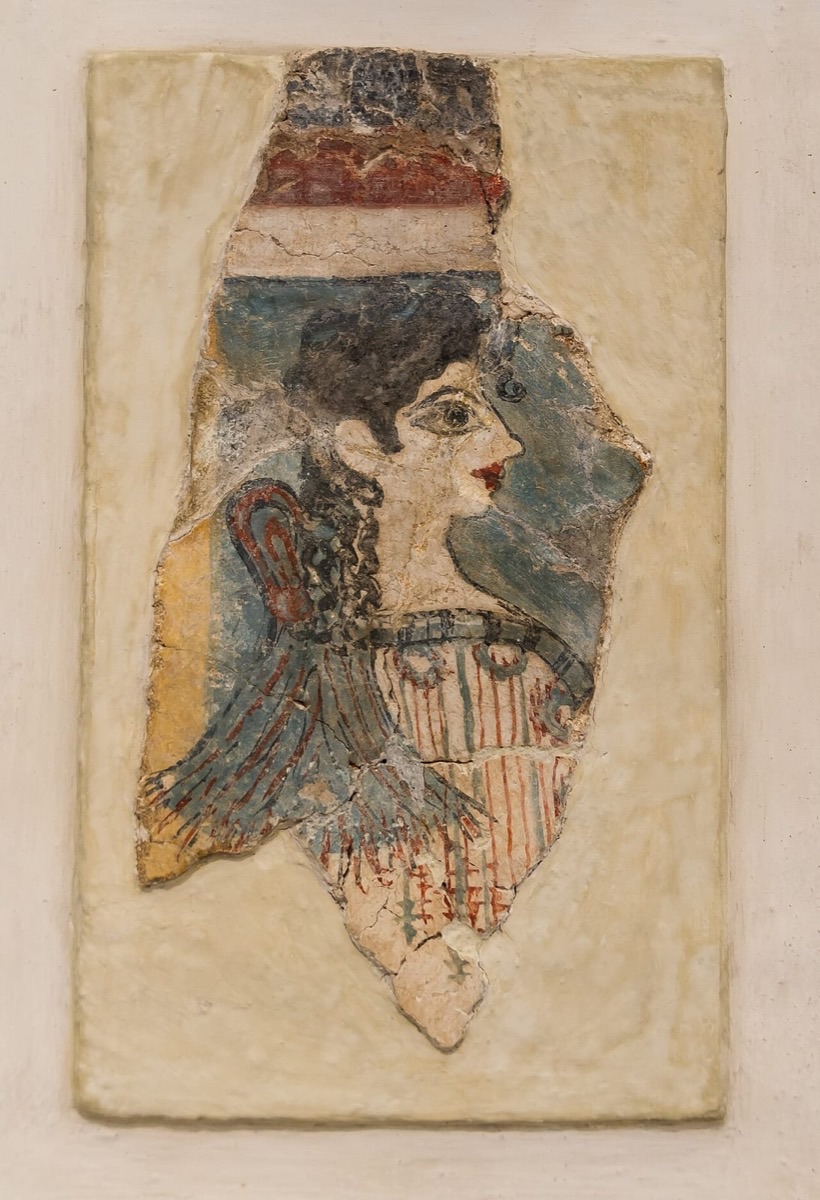
La Parisienne
Dark-eyed, red-lipped, a sacred knot at the back of her neck: the excavators of Knossos called her “La Parisienne” for her elegance. She is a fragment of a larger wall painting, the Campstool Fresco, in which seated figures raise cups in what seems a ceremonial feast. The sacred knot, a looped tie of cloth that appears again and again among Minoan cult objects, marks her as a figure of the cult, and she is often seen as a priestess.
On the tour: Day 2, the Heraklion Museum
Photo: Jebulon, Wikimedia Commons, CC0
 4
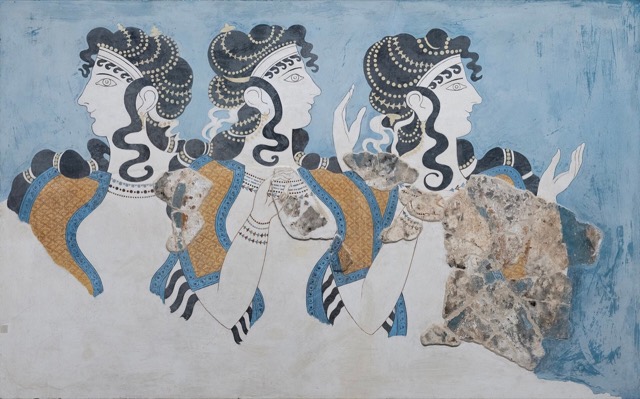
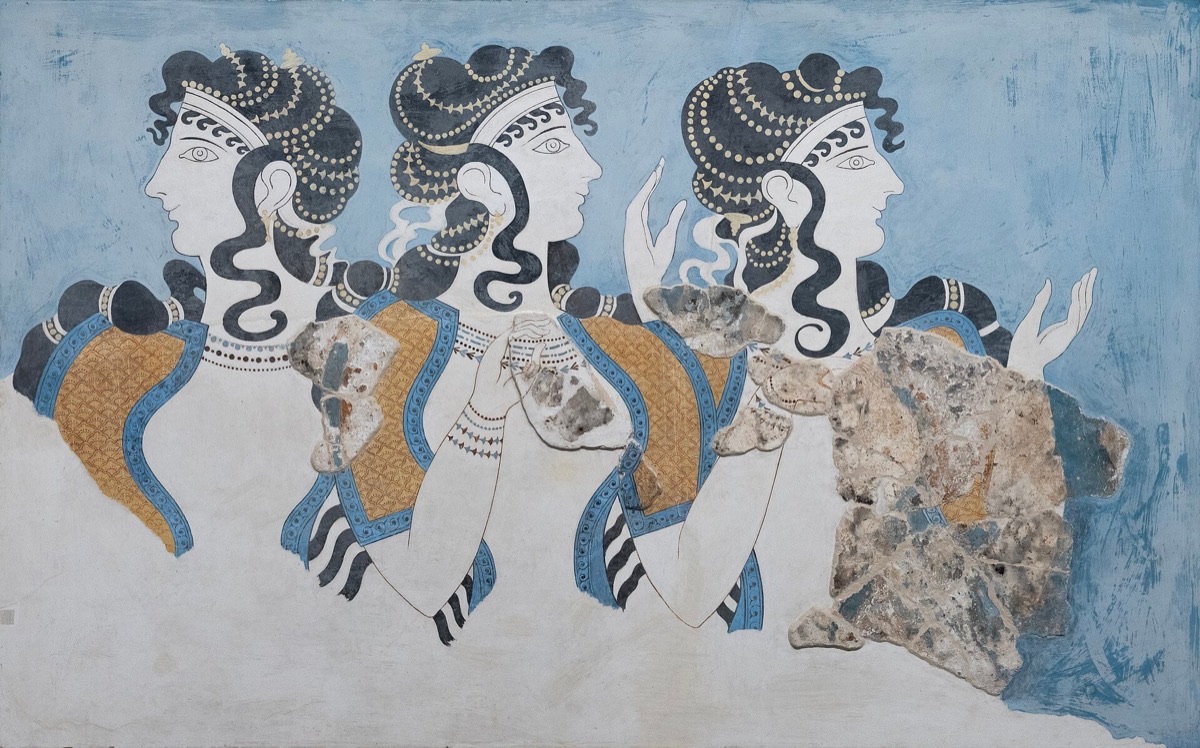
The Ladies in Blue
Pearls in their hair, jewels at their throats, their hands moving as they talk: the Ladies in Blue of Knossos. The fresco was pieced together from fragments found in the palace and much of what we see was restored in the early twentieth century, but the women themselves, poised, adorned and at ease, are true to the Minoan way of picturing women at the centre of life and ceremony.
On the tour: Day 2, the Heraklion Museum
Photo: Gleb Simonov, Wikimedia Commons, public domain
 5
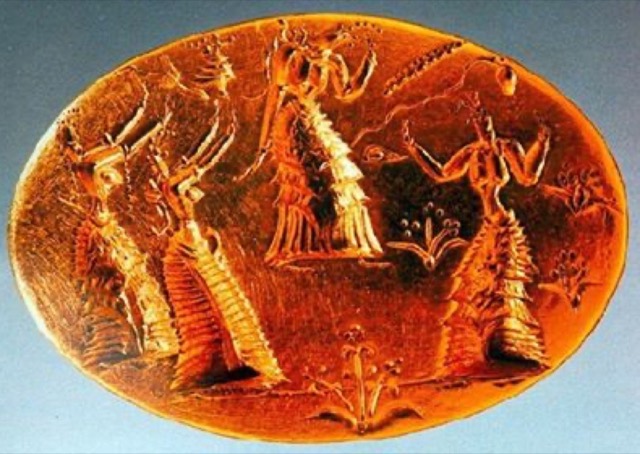
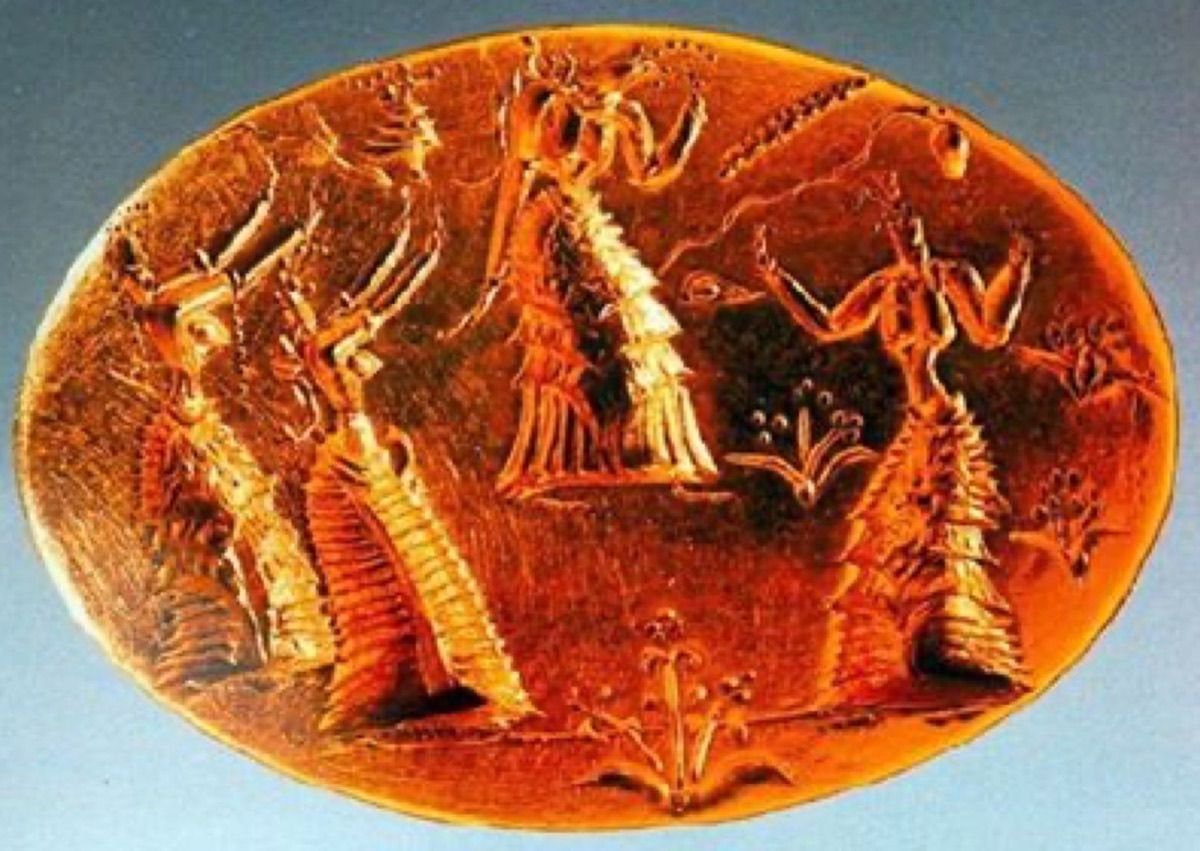
The gold ring: dancers among the lilies
On the face of a Minoan gold ring, women in flounced skirts dance among lilies, arms raised, while a tiny figure seems to descend through the air: a scene often read as the Goddess appearing to Her worshippers. Gold rings like this were treasured by people of the highest rank and often buried with them. The rings are tiny worlds of ritual, women and Goddess.
On the tour: Day 2, the Heraklion Museum
Photo from one of Anique’s past tours
 6
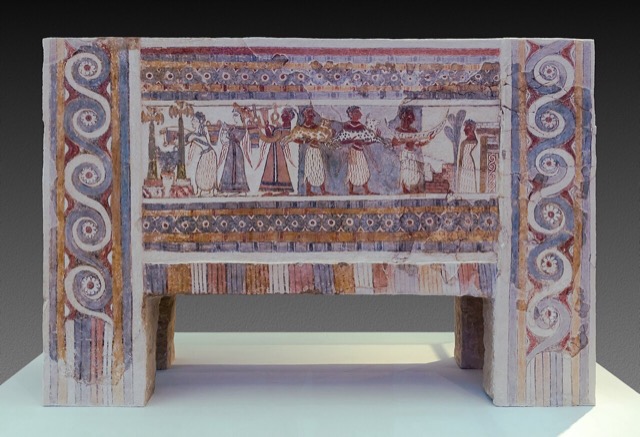
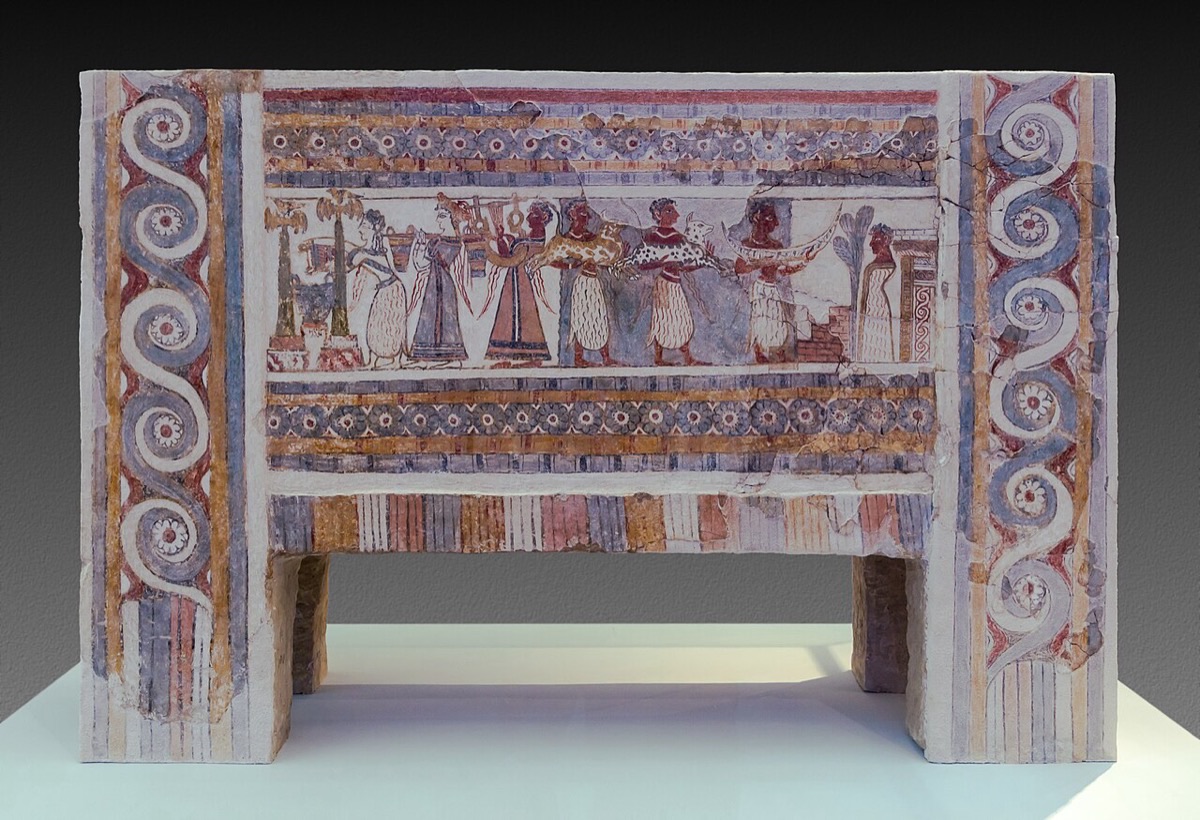
The painted sarcophagus of Agia Triada
Found at Agia Triada, near Phaistos, this painted limestone sarcophagus was made around 1370–1320 BCE. On its sides priestesses pour libations between double axes crowned with birds, a procession brings offerings to the music of the lyre, and on its ends goddesses ride in chariots drawn by griffins and by wild goats. It is one of the clearest pictures we have of Minoan women leading ritual.
On the tour: Day 2, the Heraklion Museum
Photo: Jebulon, Wikimedia Commons, CC0
Room II
Sea, Bull and Lily
The Minoans lived with the sea on every side and held the bull sacred. On the walls of Knossos dolphins swim, young people leap the bull, and processions carry vessels of offering among the lilies.
Where we see it on the tour
 7
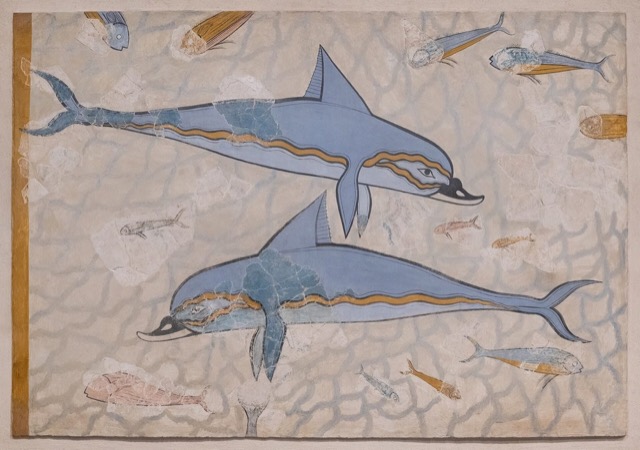
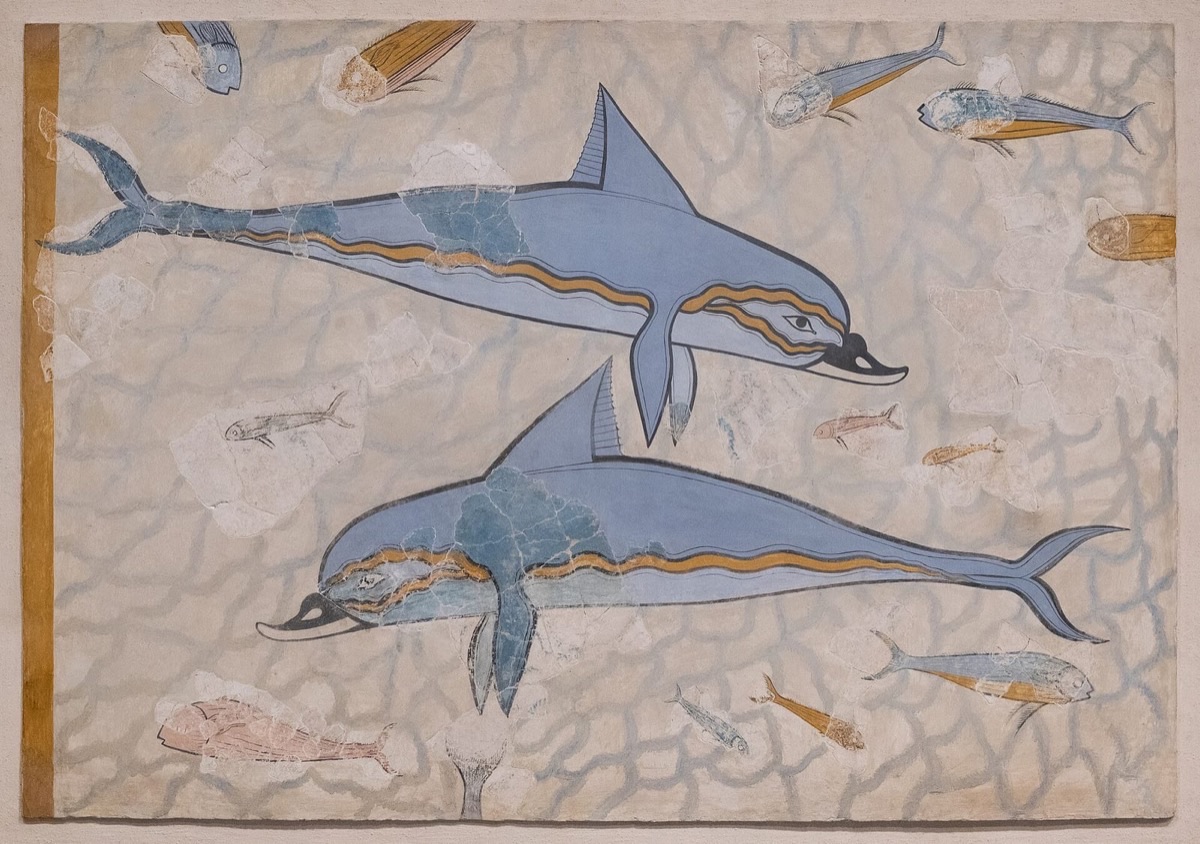
The Dolphin fresco
Dolphins and fish swim across the wall of the Queen’s Megaron at Knossos: the sea, everywhere in Minoan life, brought indoors. The fresco was restored from fragments, and the original now hangs in the Heraklion Museum, with a copy in its place in the palace. For an island people the sea was both livelihood and mystery, and the leaping dolphin is one of the most joyful creatures in all of Minoan art.
On the tour: Day 2, the Heraklion Museum, and Day 4, Knossos
Photo: Gsimonov, Wikimedia Commons, CC0
 8
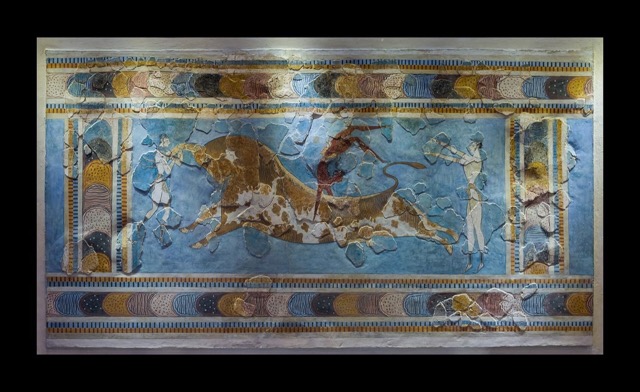
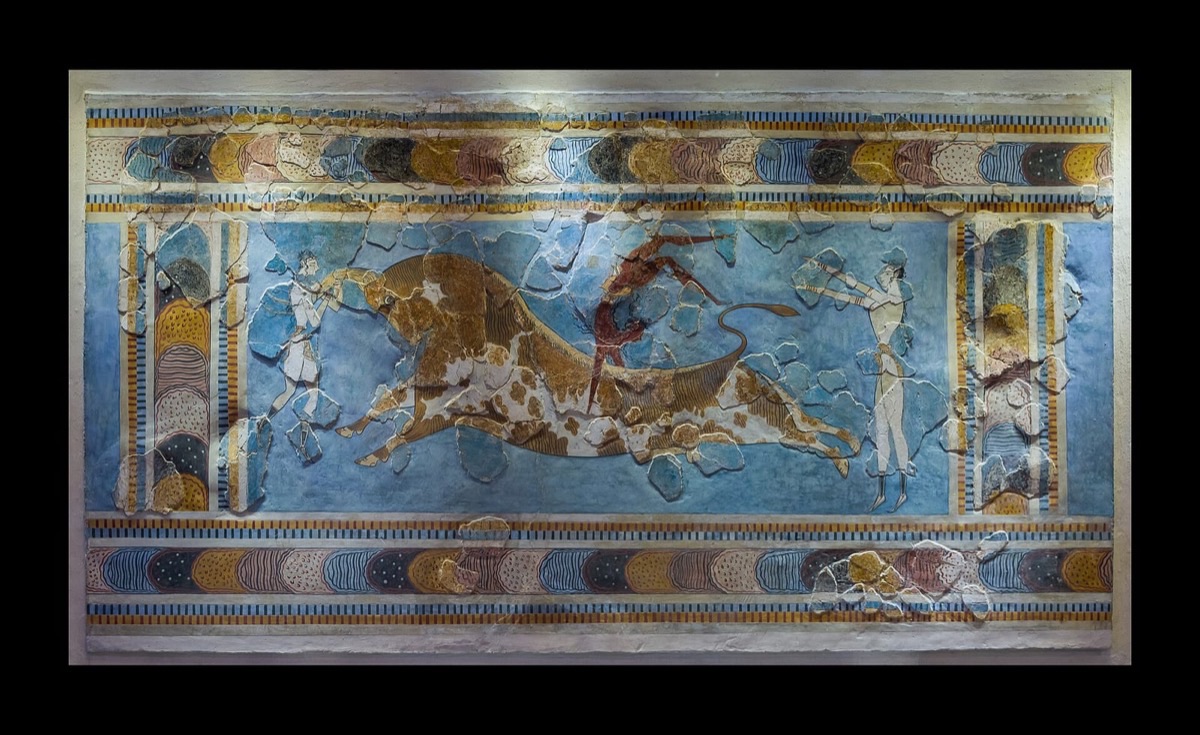
The Bull-Leaping fresco
Young leapers vault over a charging bull, painted on the walls of Knossos; the leapers painted pale are usually read as young women, following the Minoan convention of pale skin for women and red-brown for men. The bull was sacred in Minoan Crete, its horns echoed in the sacred horns that crowned shrines and palaces, and the leap was ritual as well as daring.
On the tour: Day 2, the Heraklion Museum, and Day 4, Knossos
Photo: Jebulon, Wikimedia Commons, CC0
 9
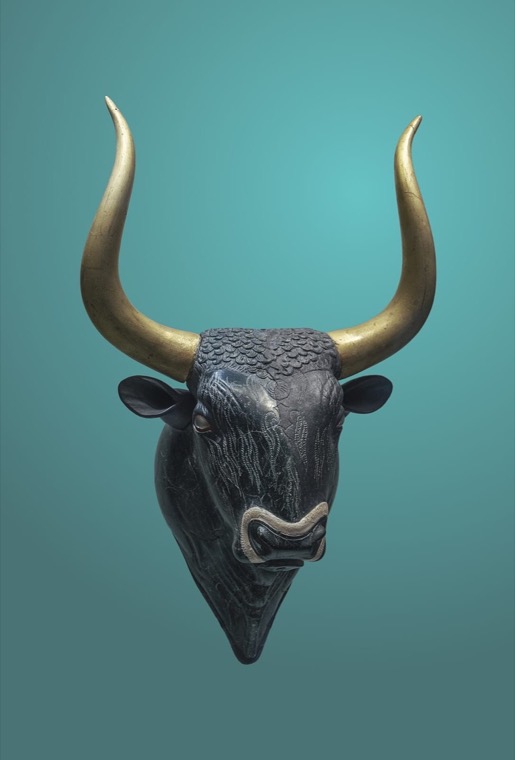
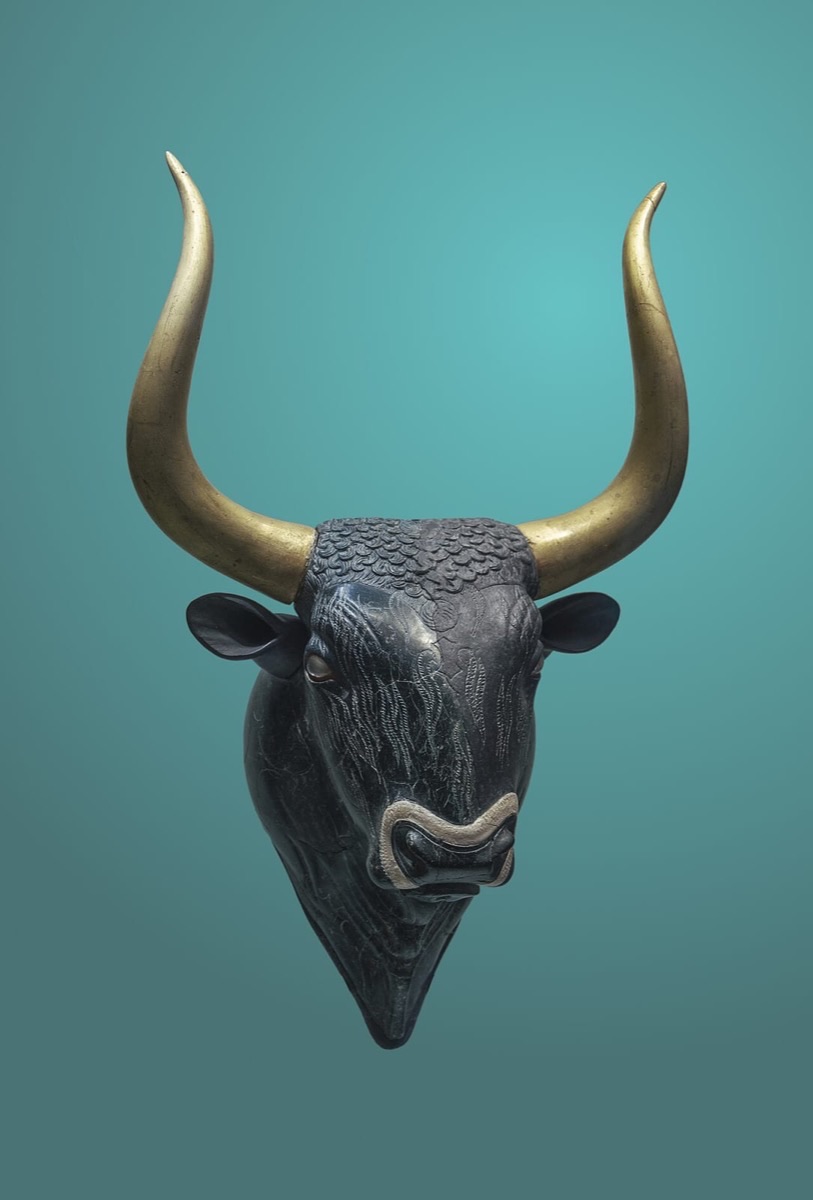
The bull’s-head rhyton
Carved in dark stone, with eyes of rock crystal and a muzzle inlaid with shell: the bull’s-head rhyton, a ritual vessel from the Little Palace at Knossos. Liquid poured in through the neck flowed out through the bull’s mouth, so it was made for pouring libations, offerings of wine, oil or milk. The gilded horns are a modern restoration. It brings together two sacred things of Minoan Crete: the bull and the offering.
On the tour: Day 2, the Heraklion Museum
Photo: Jebulon, Wikimedia Commons, CC0
 10
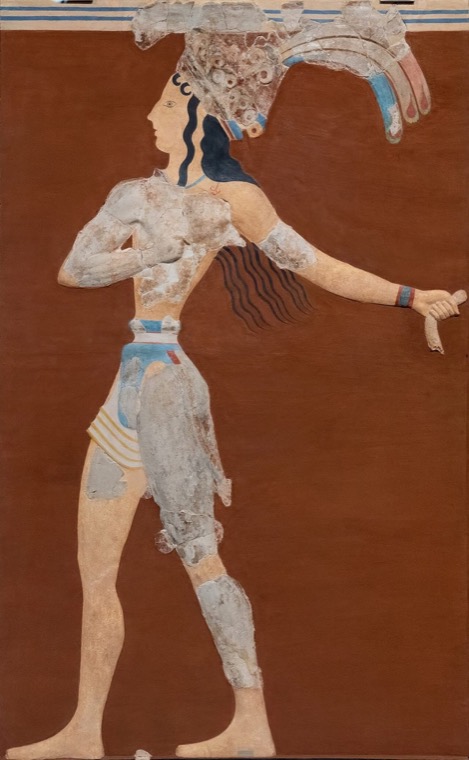
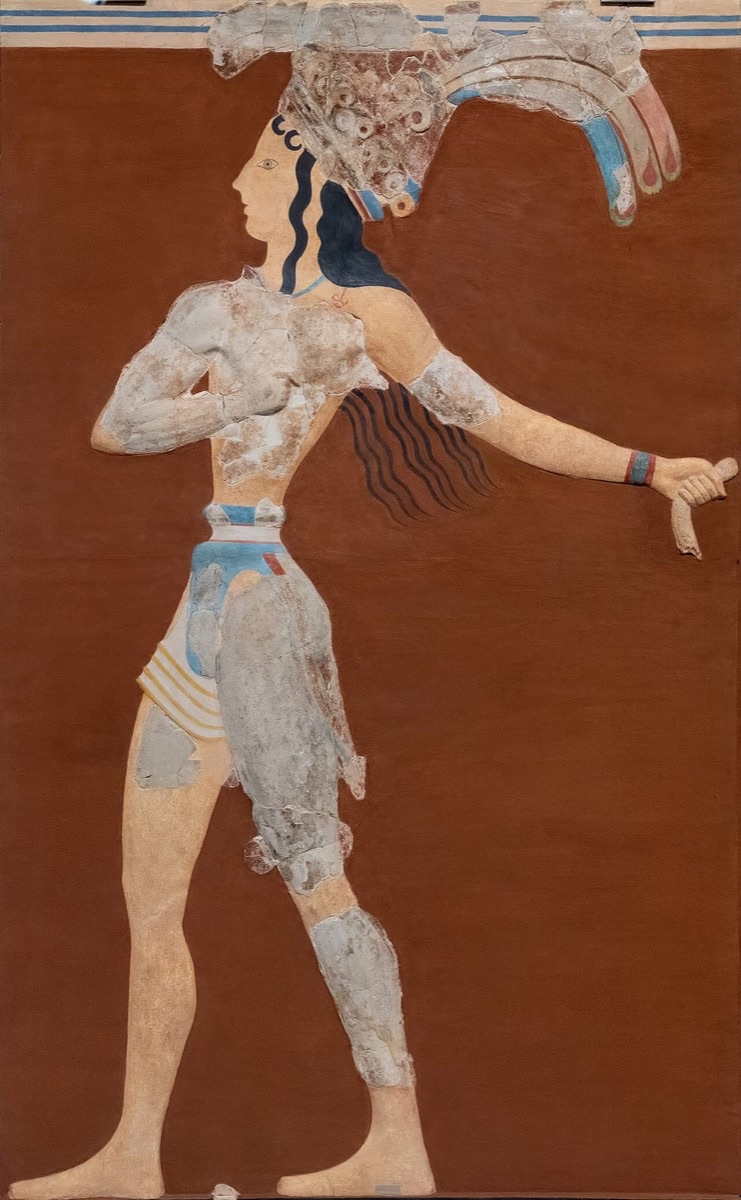
The Prince of the Lilies
A young figure walks among lilies, crowned with lilies and peacock feathers: the Prince of the Lilies, a painted plaster relief from Knossos and one of the most famous images of Minoan Crete. Only fragments survived, and how they fit together is still debated; some scholars think the crown and the body belonged to different figures. The lily, flower of purity and renewal, blooms throughout Minoan sacred art.
On the tour: Day 2, the Heraklion Museum, and Day 4, Knossos
Photo: Gsimonov, Wikimedia Commons, CC0
 11
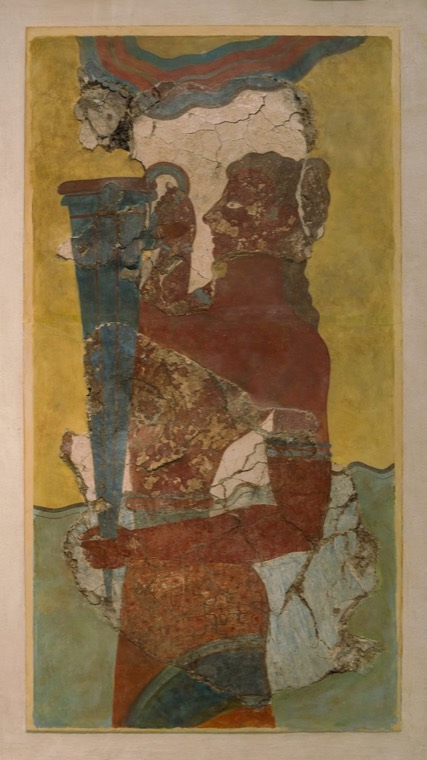
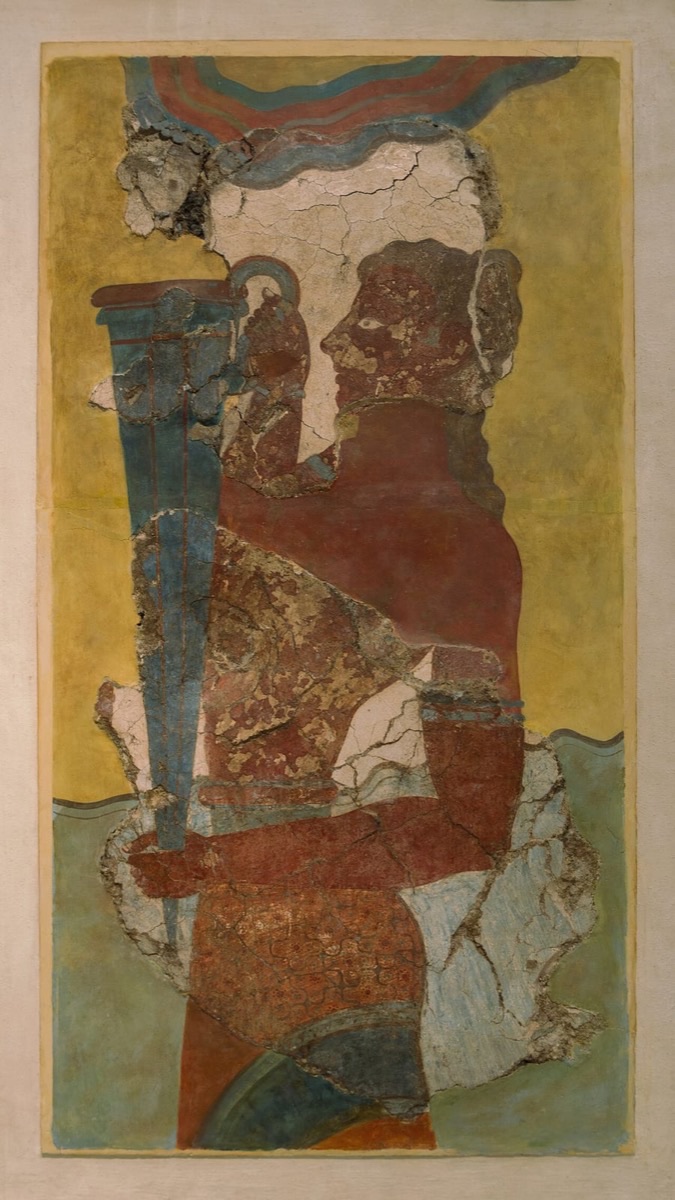
The Cup-Bearer
A young man carries a tall ritual vessel in procession: the Cup-Bearer, from the Procession fresco of Knossos, part of a great line of figures, women and men, bringing offerings through the palace. The vessel he holds is a rhyton, used for pouring libations. Processions of offering-bearers recur in Minoan art, and many scholars think they moved towards a central figure: a goddess, or the priestess who stood in Her place.
On the tour: Day 2, the Heraklion Museum
Photo: Jebulon, Wikimedia Commons, CC0
 12
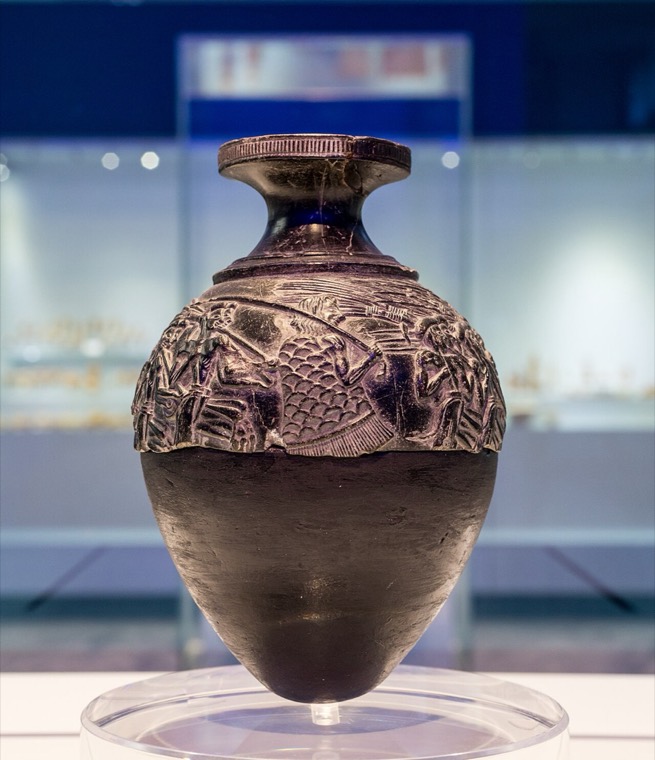
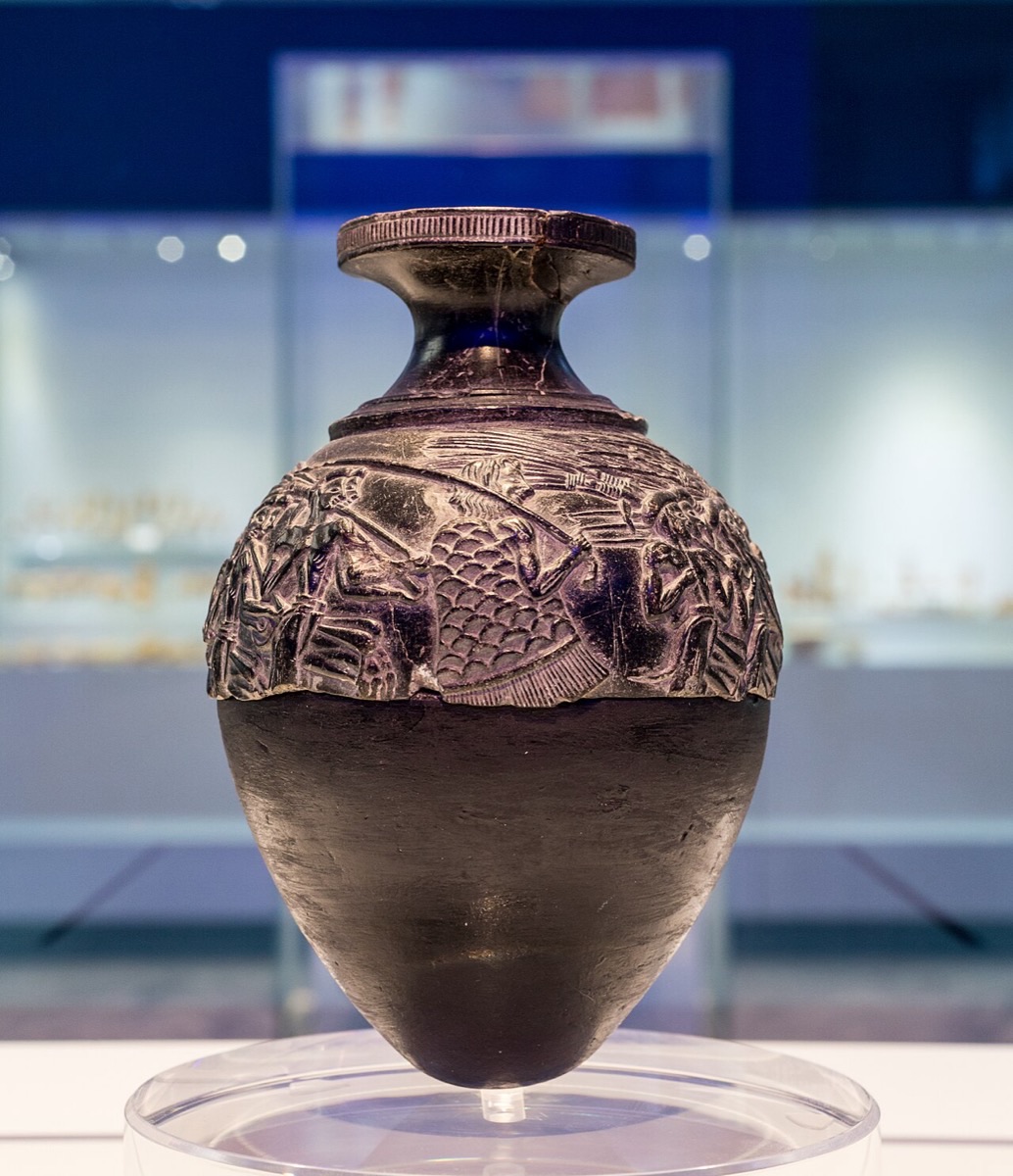
The Harvester Vase
A procession of harvesters walks and sings around this black stone vessel from Agia Triada, near Phaistos: the joy of the harvest carved in Minoan Crete. Only the upper part survives. The men shoulder long harvest tools, one shakes a sistrum, a rattle, and others sing with open mouths. Whether it shows a festival of the harvest or a ritual procession, it is full of movement, music and thanksgiving to the fruitful earth.
On the tour: Day 2, the Heraklion Museum
Photo: ArchaiOptix, Wikimedia Commons, CC BY-SA 4.0
Room III
Mysteries and Offerings
A spiral of signs that no one can read, an offering stone ringed with hollows, the finest pottery of the Bronze Age, and the painted chests in which the dead were laid: the quieter mysteries of Minoan worship and daily life.
 13
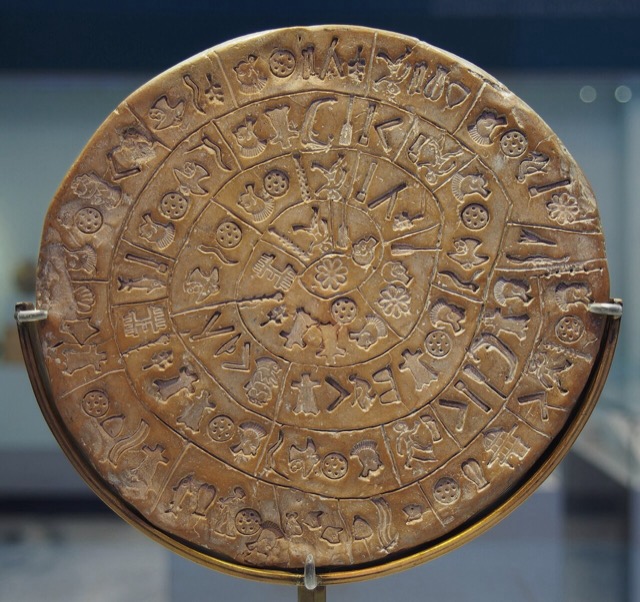
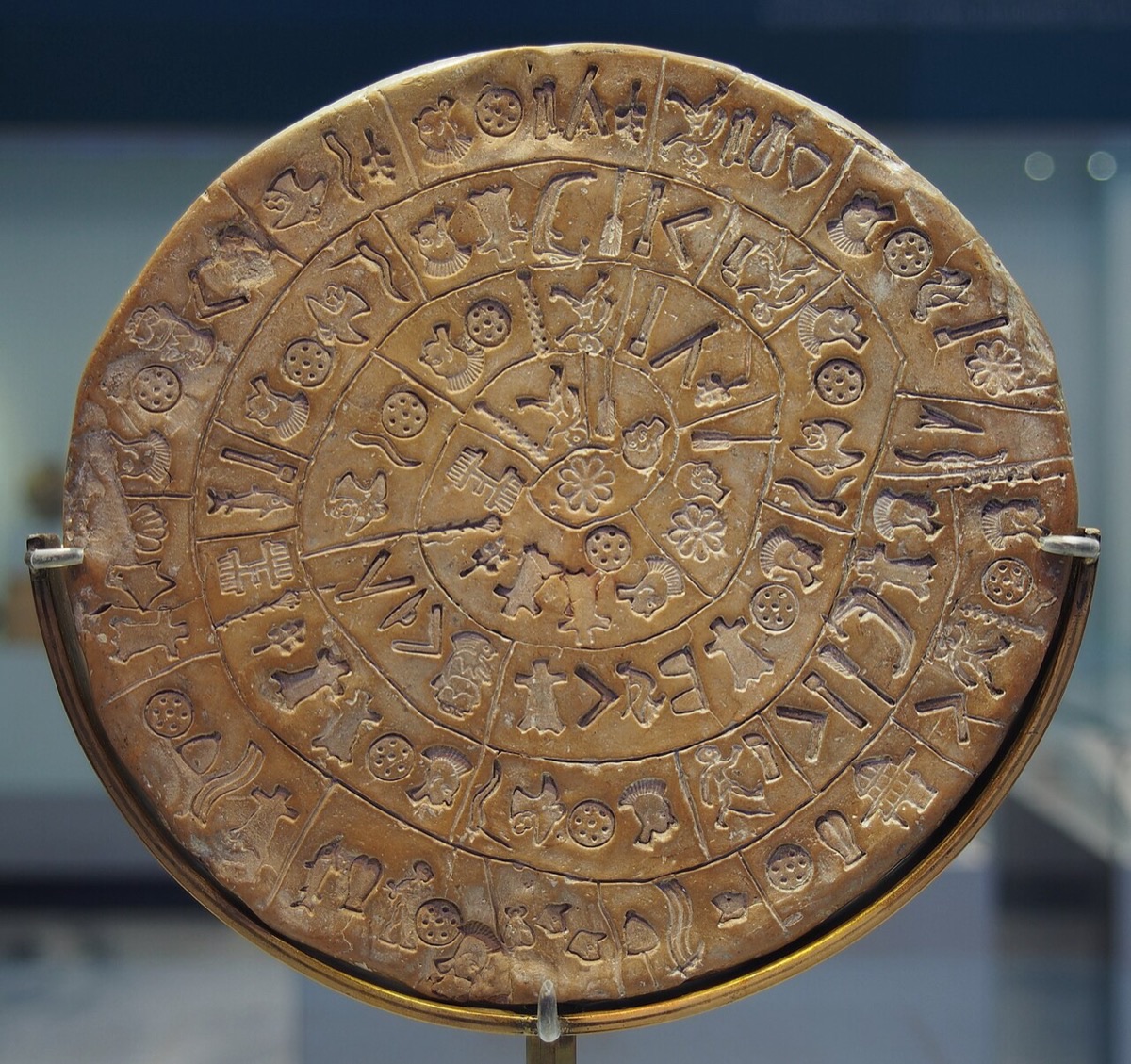
The Phaistos Disc
A disc of fired clay found in the palace of Phaistos in 1908, made around 1700 BCE, its signs pressed into the clay in a spiral on both sides. Each sign was stamped with a carved punch, which makes the disc one of the earliest known uses of movable type. Some forty-five different signs appear, among them heads, figures, plants and tools. Nearly 4,000 years later no one has read them.
On the tour: Day 2, the Heraklion Museum
Photo: C messier, edit by Bammesk, Wikimedia Commons, CC BY-SA 4.0
 14
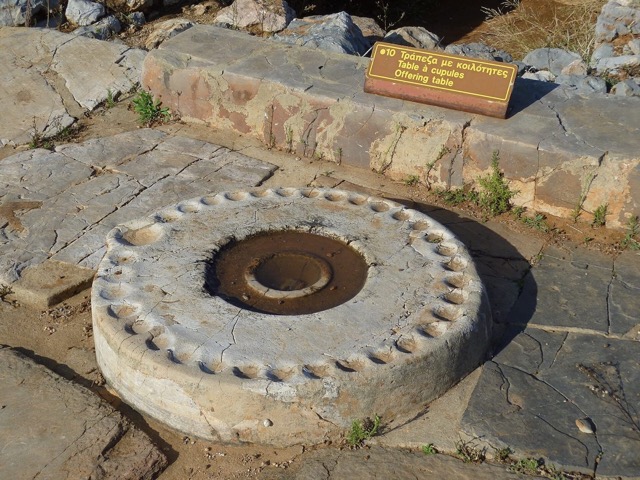
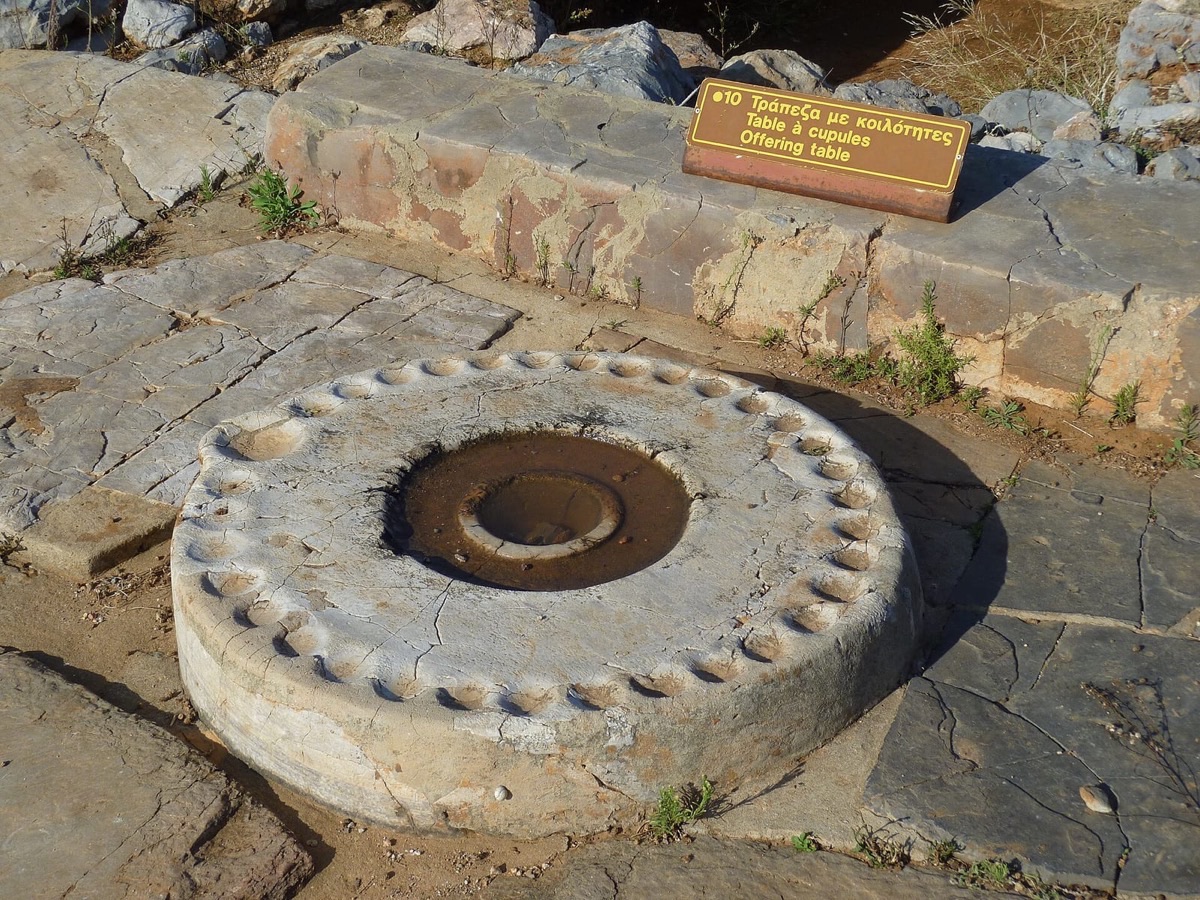
The kernos of Malia
A great round stone ringed with small hollows around a larger central one, set in the ground beside the Central Court of the palace of Malia. It is thought to have held offerings to the Goddess, perhaps the first fruits of the harvest, a seed or grain or a drop of oil in each hollow; some have suggested it was a gaming board instead. It still lies where the Minoans placed it.
On the tour: Day 7, Malia
Photo: Bernard Gagnon, Wikimedia Commons, CC BY-SA 4.0
 15
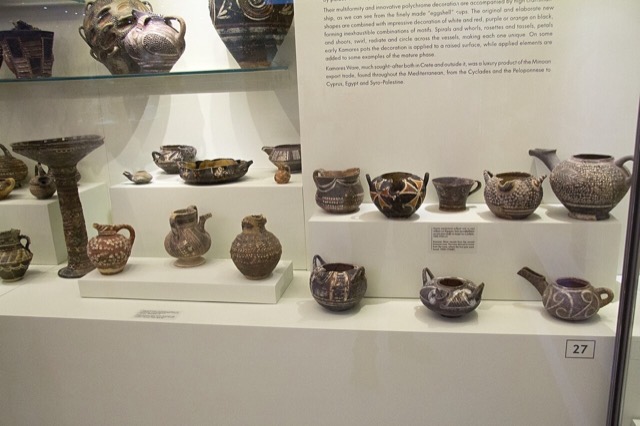
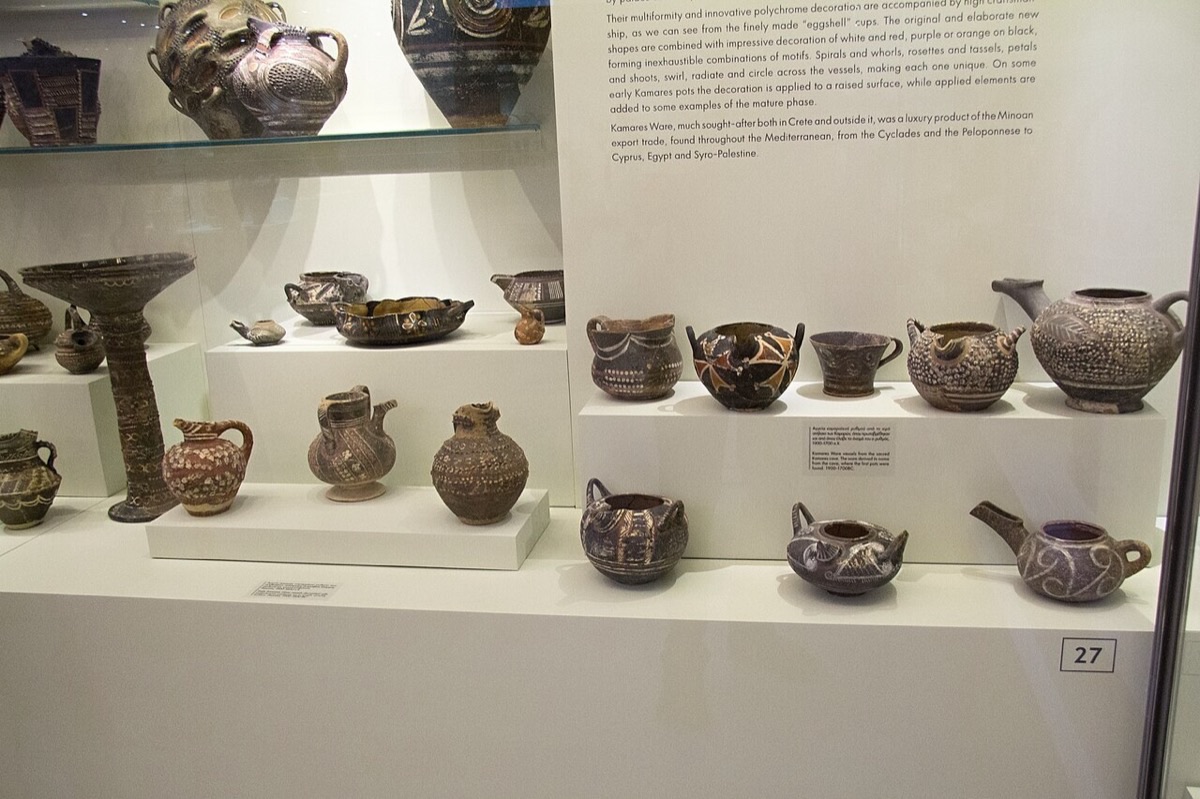
Kamares ware
Fine, many-coloured pottery painted with spirals and flowers, named after the sacred cave of Kamares on Mount Ida, where it was first found: made around 1900–1700 BCE. The finest pieces, with walls as thin as eggshell, came from the palace workshops of Knossos and Phaistos. That such beautiful vessels were carried up the mountain and left in a sacred cave tells of offerings made to the Goddess in Her high places.
On the tour: Day 2, the Heraklion Museum
Photo: Zde, Wikimedia Commons, CC BY-SA 4.0
 16
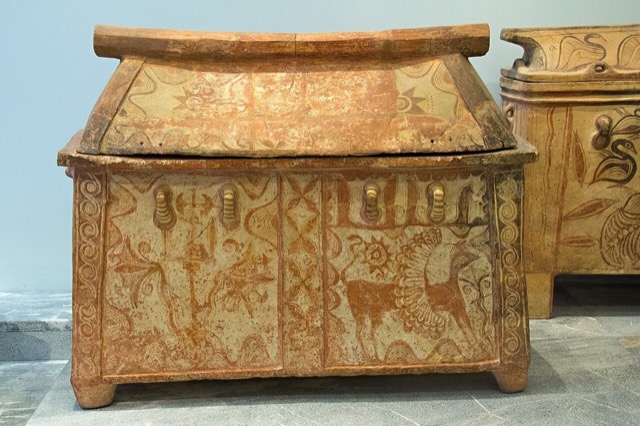
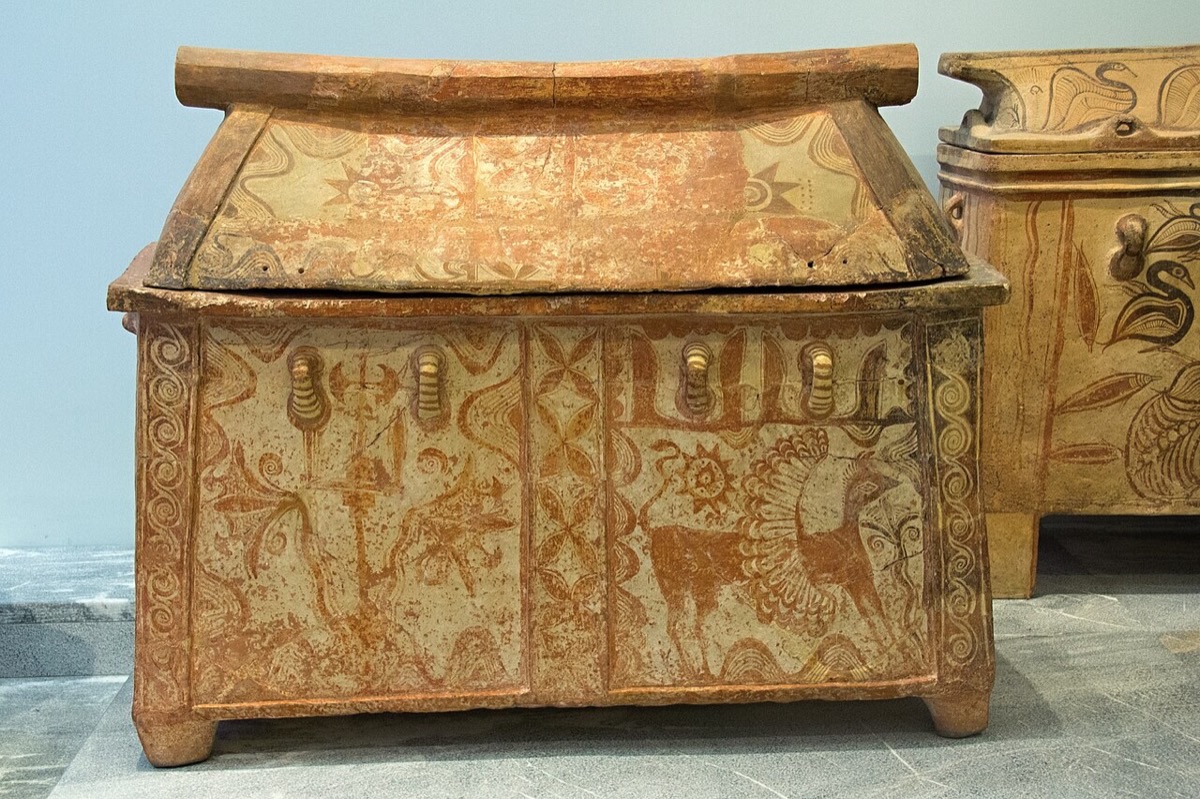
A painted larnax with a griffin
A Minoan clay chest for the dead, a larnax, painted with plants and a griffin, the guardian creature of Minoan art. Clay larnakes like this were made in the later Bronze Age, often shaped like a wooden chest or a bathtub and painted with flowers, birds, sea creatures and sacred symbols. The griffin, part eagle and part lion, is often shown beside the Goddess, and here it seems to watch over the one at rest.
On the tour: Day 2, the Heraklion Museum
Photo: Zde, Wikimedia Commons, CC BY-SA 4.0
 17
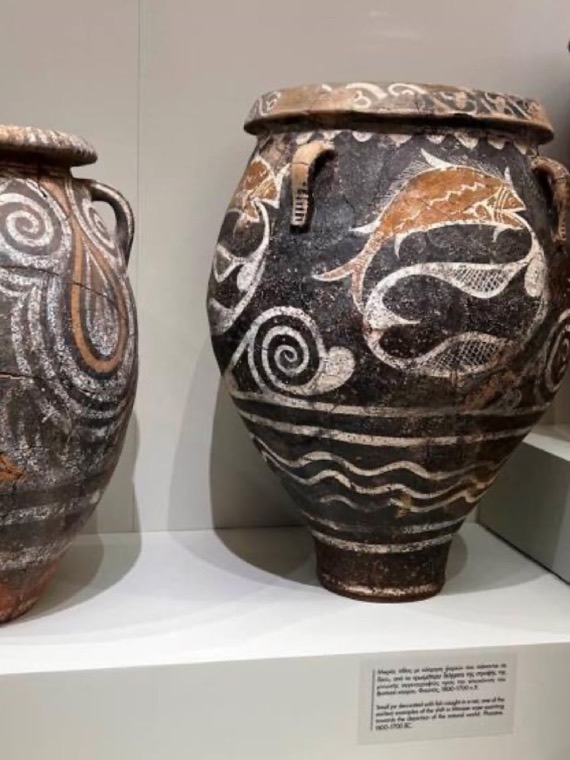
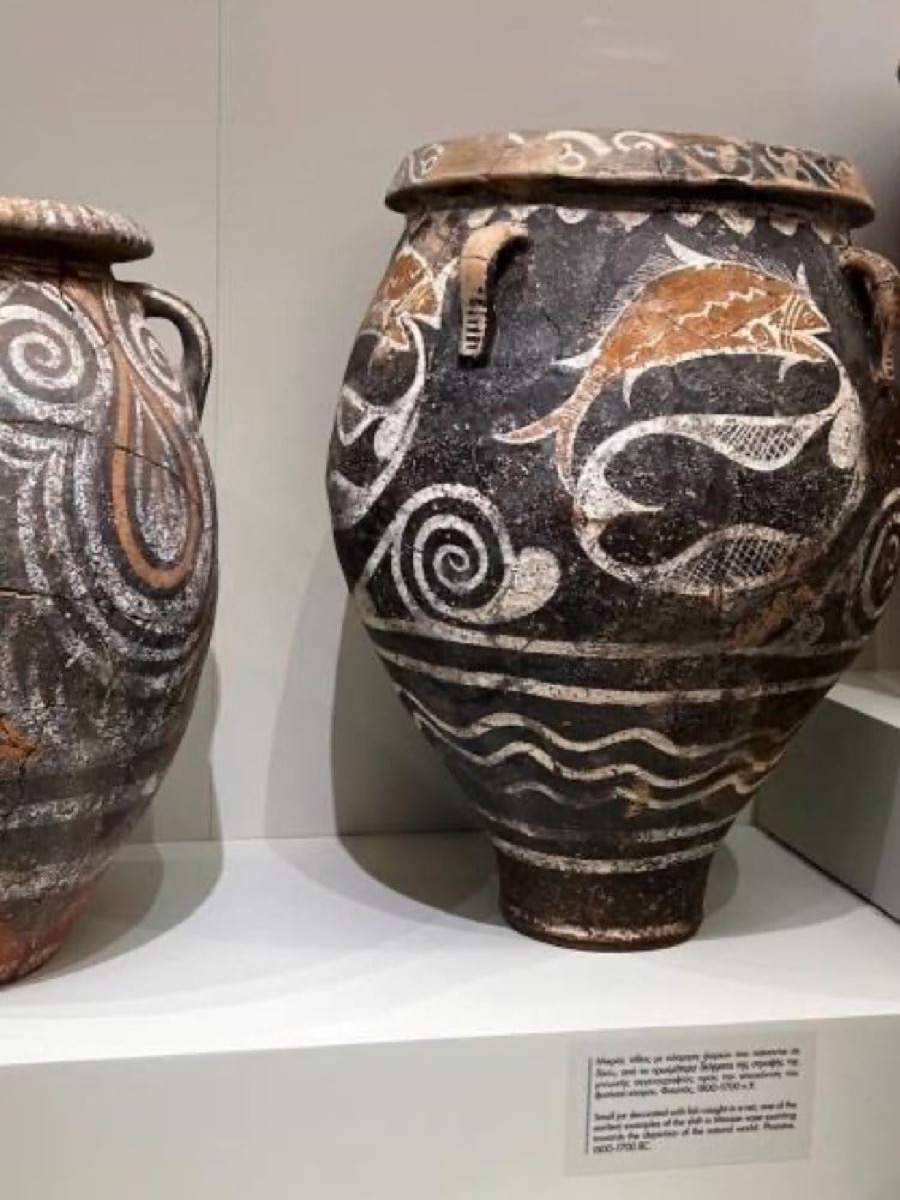
Painted Minoan jars
Great clay jars painted with dolphins and spirals, made to store oil, grain and wine. Rows of storage jars, the largest taller than a person, filled the magazines of the Minoan palaces, holding the wealth of the land and the stores for feasts and offerings. Even jars made for the storeroom were painted with the sea and the spiral, as if every part of life deserved beauty.
On the tour: Day 2, the Heraklion Museum
Photo from one of Anique’s past tours
 18
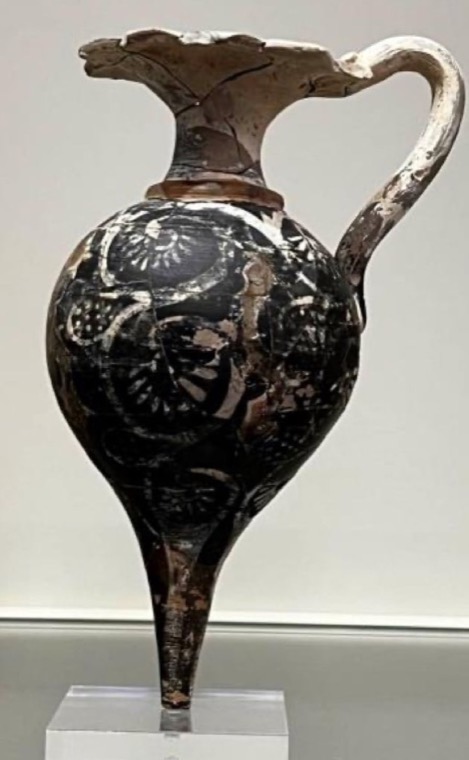
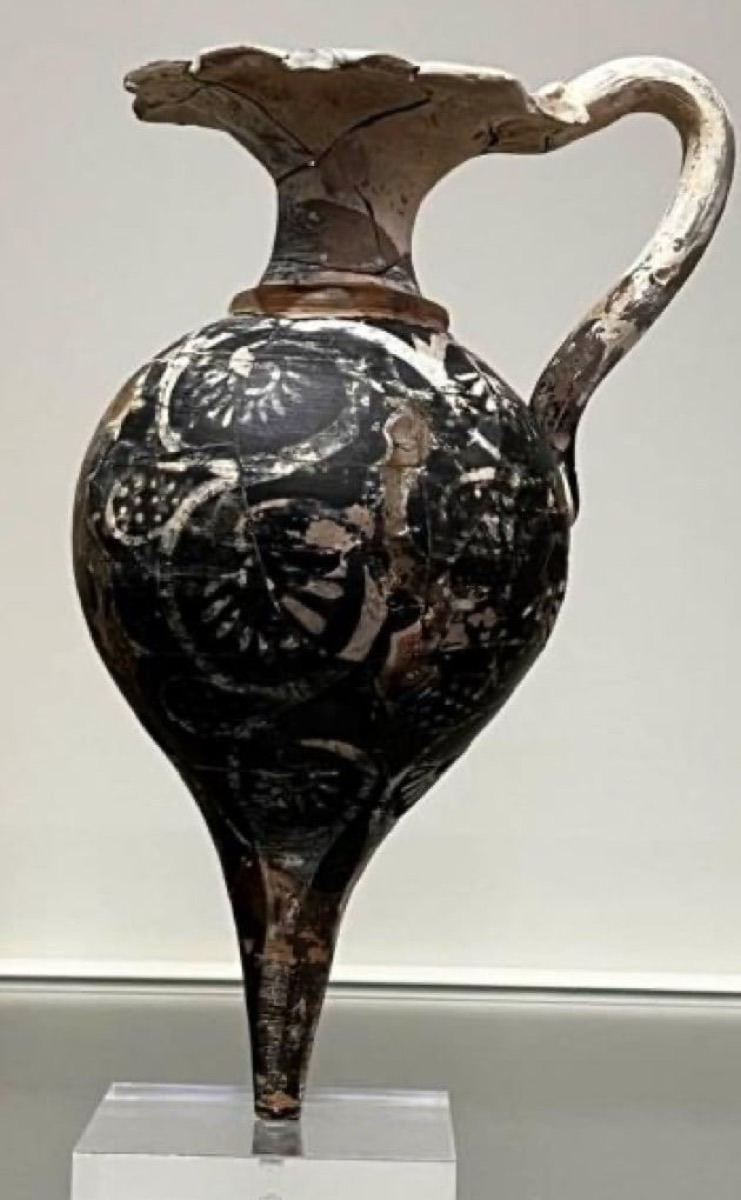
A painted Minoan jug
A jug painted with spirals and flowers: the Minoans were extraordinary potters, and the craft lives on in Crete today. This one has a wide, flaring spout, a looped handle and a body that tapers to a point, so it could not stand on its own; vessels like it may have been held, hung or set in a stand when used. The spiral, endlessly turning, is the signature of Minoan art.
On the tour: Day 2, the Heraklion Museum, and Day 6, a master potter
Photo from one of Anique’s past tours
Room IV
The Bee Priestesses of Malia
At Malia, on the north coast east of Heraklion, the palace craftsmen worked in gold and stone. The bee, maker of honey, was sacred to the Goddess, and Malia, home of the Bee Priestesses, is Anique’s favourite day of the whole tour.
 19
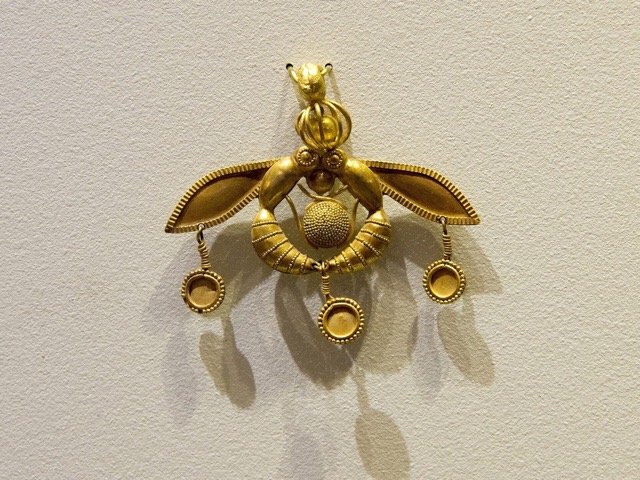
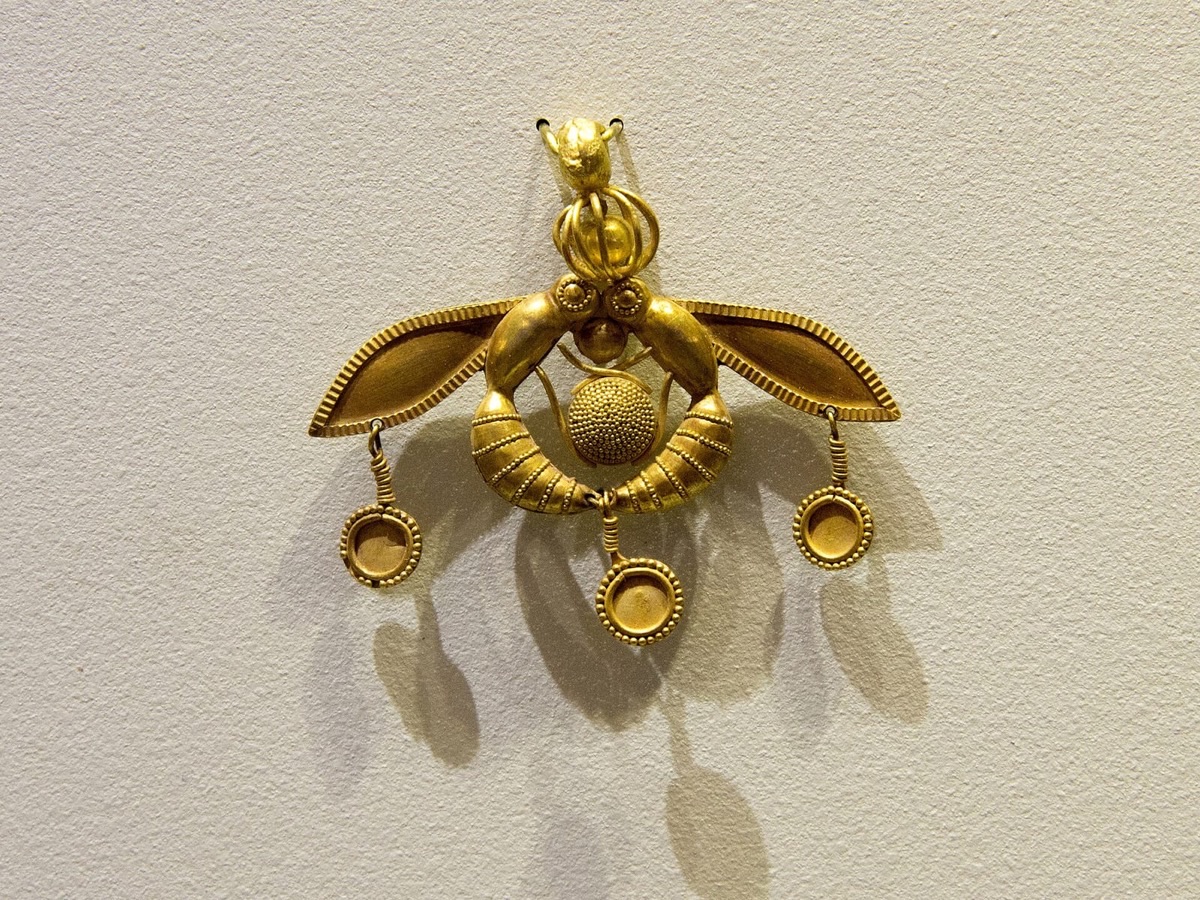
The golden Bee Pendant
Two golden bees curled around a single drop of honey: the Bee Pendant, made around 1800–1700 BCE and found at Chrysolakos, beside the palace of Malia. It is worked with granulation, tiny grains of gold, and from it hang small golden discs. The bee was sacred to the Goddess, and in later Greek tradition Her priestesses were called the Melissae, the bees.
On the tour: Day 2, the Heraklion Museum, and Day 7, Malia
Photo: Zde, Wikimedia Commons, CC BY-SA 4.0
 20
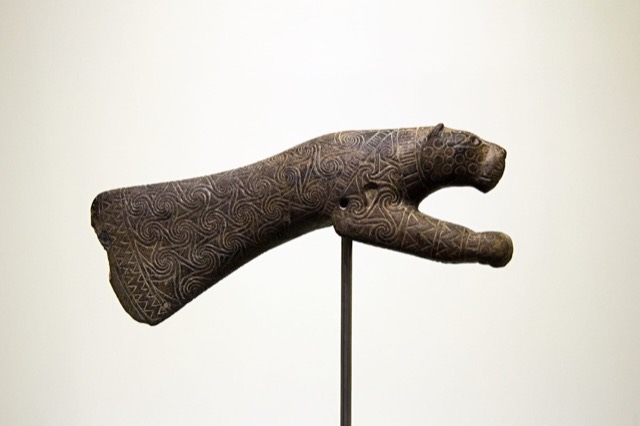
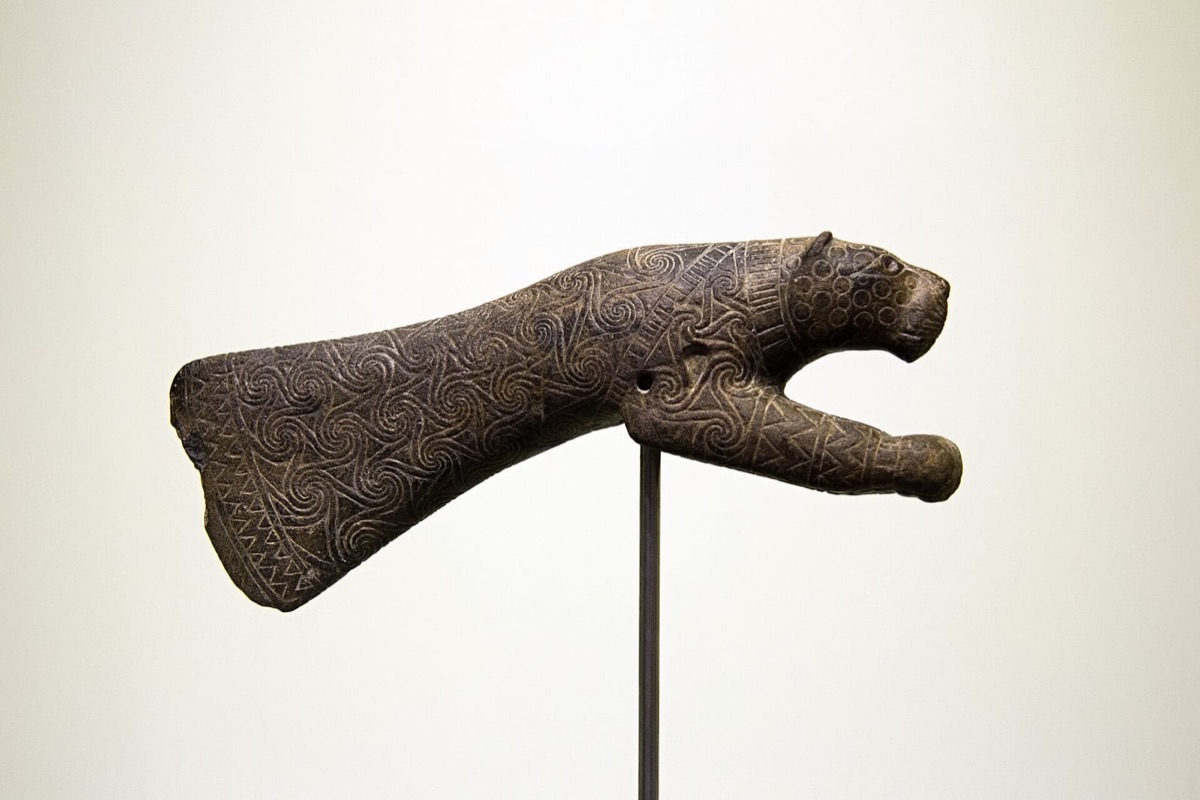
The panther sceptre-head
Half axe, half leaping panther: the head of a sceptre found at the palace of Malia, made around 1800–1700 BCE. Carved from a single piece of stone, it was a ceremonial object rather than a working tool. A sceptre is a sign of sacred authority, and this one, with its great cat, recalls the wild beasts that walk beside the Goddess in Minoan art as their Mistress.
On the tour: Day 2, the Heraklion Museum, and Day 7, Malia
Photo: Zde, Wikimedia Commons, CC BY-SA 4.0
Stand before these treasures with Anique
Join Anique Radiant Heart on a transformative journey to Northern Crete, 19–26 August 2027
← Back to the Northern Crete tour
Photographs: Wikimedia Commons contributors, under the licences shown on each label, and photos from Anique’s past tours. Every picture is shown whole.
